

I LOVE Pinterest.
What teacher doesn’t? I mean, there is seemingly endless amounts of information, ideas, activities, and people out there to follow! How can you not love being able to type in a quick content phrase and instantly getting a large list of ideas or inspiration to spark your own ideas!? If I’m not using it for school, I’m constantly using it to design my “farmhouse” dream home (who isn’t?), gift ideas, craft inspiration, and even learning how to magically cure any ailment under the sun using apple cider vinegar (who knew?!).
I’ll say it again, I love it.
I wanted to share a bit about a little spin I took on a common Pinterest idea. It’s easy, fun, and super engaging.
Drawing inferences and supporting them with explicit information from the text is a big standard for 4th and 5th grade. So, I was Pinteresting (I think it can now be considered a verb) some ideas for teaching students how to draw inferences. I came across one inferencing analogy multiple times- using the idea of s’mores. I thought this was a fantastic idea. So, I started busily making an interactive anchor chart that we could build together, finding the perfect text, and planning out how I was going to excitedly make this meaningful for the students.
Then it hit me. Why not make it hands-on?
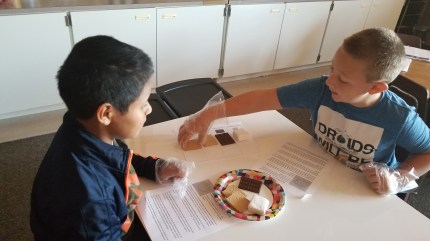
There are many concepts in reading that are so abstract to young minds, drawing evidence-based conclusions about the “unsaid” in a text, for example. It’s challenging, both to teach and to learn. However, I believe that if we can provide the students with more tangible ways of learning, especially in reading- they will be better able to solidify those concepts within their own cognition and further apply them on their own. The more we can give their brains something to latch on to, the more the learning will be retained and put into practice automatically.
So I brought smores to class. I taught them what each of the parts of a smore represented, we reviewed some of the critical vocabulary (schema, inference, conclusion, etc.), and I began reading a story while they literally built inferences along the way!

I read one of my favorite stories that I use to teach this concept, The Empty Pot by Demi. I would read a few sections, then I would stop and ask questions that would require students to draw an inference from the story. In order to answer the
question, students would work with their partner to combine the “solid” evidence from the text (graham crackers) and their “sweet” schema (chocolate) to prove the yummy conclusion that they can draw about the story. The whole smore, in turn, would be their complete answer to explain their thinking to the rest of the class. Then we would disassemble, keep reading, and continue the process until we finished the story.

It was so fun! They were so engaged! It was so wonderful to watch students actually build their thinking around a reading skill. It also made for a pretty delicious snack when we were done.
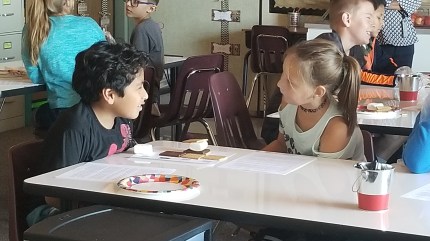
So there it is, friends. One example of taking a Pinterest idea to the next level. I now challenge you to up your Pinterest game. Don’t just look for a teaching idea, look for inspiration to make that idea more meaningful and empowering for your students’ learning! It doesn’t always have to be food, although, I will say that there is some pretty amazing buy-in when they know that they will get to eat it when it’s all over.
Look for ways to make your lessons more delicious. 🙂
 Teaching in the 307